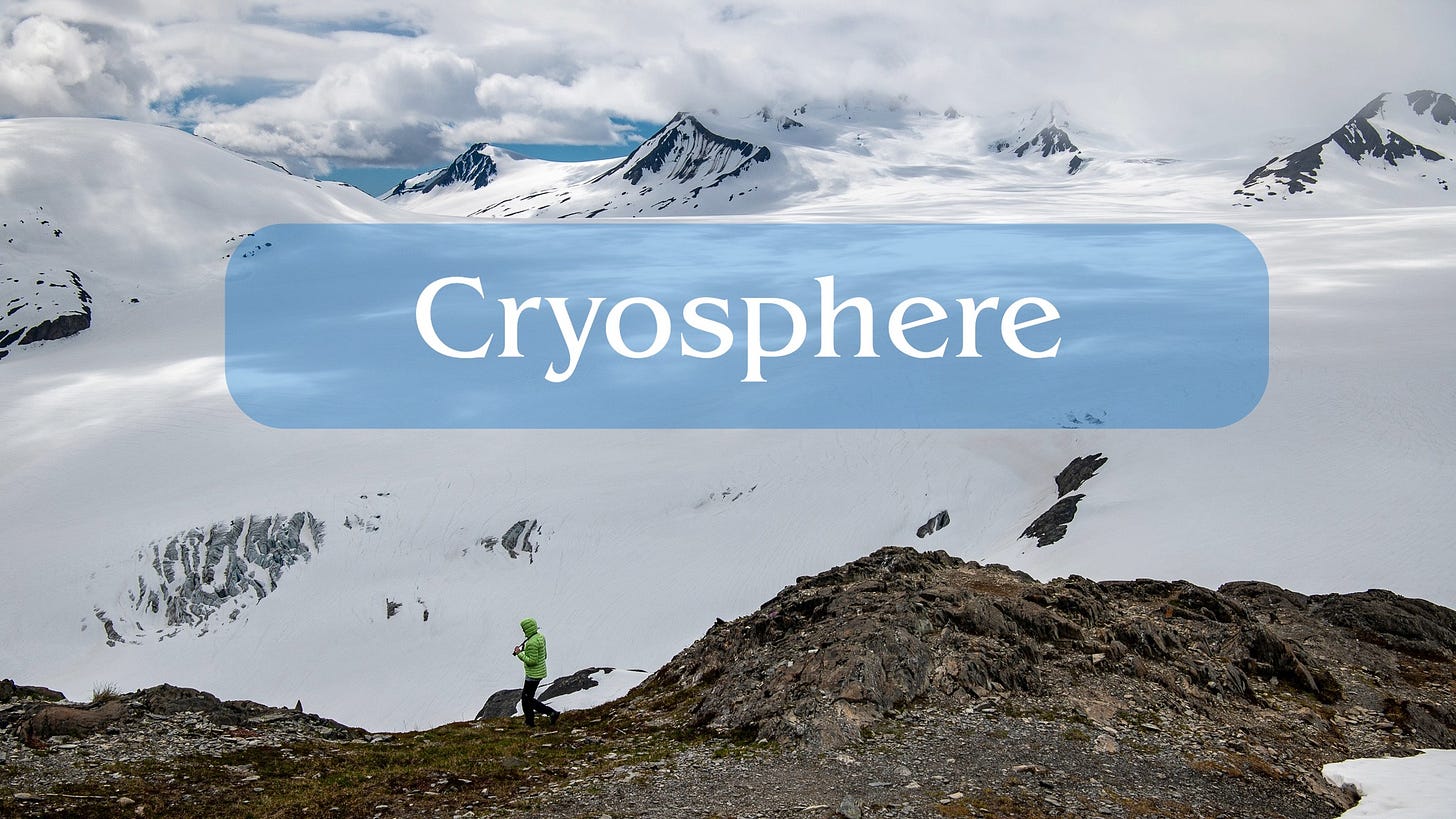
Field notes from a changing cryosphere
I have spent over a decade photographing water and ice in Alaska. It started as a photographer’s fascination with the range of color and texture of both. But the more I looked, the more questions I had. The physicist in me wanted to understand why the two phases of the same molecule can take such rich, complex forms.
What has surprised me over that decade is how much change I’ve seen on our glaciers. Reading about climate change always felt distant. It is happening, of course. Global temperatures are rising, and we know glaciers and ice caps are retreating. But seeing the changes with my own eyes brought a level of urgency and immediacy I hadn’t felt before.
Now, when I photograph a glacier cave, I know I may be documenting one of its last seasons. The thinning and recession of glacier termini and icefalls are noticeable in many locations over just a few years. It’s not just that future generations may not have these sights, but that some of them may be gone within our own lifetimes.

The Cryosphere section is my attempt to keep a record. Whenever possible, I pair photographs with explanations of how glacier features form: crevasses, foliation, meltwater channels, glacier caves, and moulins. I use repeat photography, from my own photos and historical images, to show how glaciers change over time. I’m building a glacier inventory of every glacier I visit, including its photographs and the research behind it.

I’m a photographer with a physics background. I spent three years studying and working on the Black Rapids Glacier in the eastern Alaska Range in graduate school. Now I use photography and writing to document science, nature, and a changing cryosphere.
When you stand in front of a glacier, the ice often seems static. It isn’t. And on most of Alaska’s glaciers, it is changing faster now than when measurements began. These are my field notes from that change.
Support this work
This project is supported by readers. Your support pays for time in the field: fuel and gear to return to the same glaciers year after year, time-lapse cameras I hope to install on icefalls, and the hours it takes to turn field notes into articles.
The most direct way to help me and this project is by becoming a founding member of Field Notes From the North on Substack. Regular monthly or annual memberships help too. If you’d rather give a one-time donation, you can support the project on Ko-fi. If you’d simply like to follow along, a free subscription delivers new field notes by email.
Much of the field notes and work that goes into the articles will be published only for subscribers, giving a much clearer view of what I’m doing and what I’m seeing.
Go to my Cryosphere page at the link below!